Decisions, decisions, decisions
Some students are very clear about their passions and know exactly what they want to major in from the very beginning of college. The majority of students, however, are not so certain. What can help you to decide on a major?
A sea of choices
There are thousands of occupations from which to choose, many career assessments to jump start your ideas and frequent listings of top 10 careers or hottest jobs. But there is no specific test that will tell you what to be when you are older or what should be your major! Many students initially choose careers that open up job opportunities that pay very well. But it’s not all about the money.
While earning power is a consideration, it is more important to find a career that you love to do, that is right for you and that you can’t believe you are getting paid to do! Your values and what you deem important in life will ultimately play a role in your career satisfaction. Especially important for students with disabilities is to choose a major in which your strengths will be utilized on a regular basis and a major that allows you to compensate for less important skills that are not as strong. These considerations will maximize your chances for success.
What is a major?
A major is an area of study that allows you to build knowledge and skills around a specific subject or specialty area. To earn a degree in a particular major, each college requires certain courses and course credits and may provide choices for predetermined electives. These established programs are often based on national or state accreditation standards in order to guarantee that graduates are proficient with identified skills and knowledge. Most majors also require general education courses such as English, science, social sciences, math, etc.
Showing posts with label Mindset. Show all posts
Showing posts with label Mindset. Show all posts
Monday, December 6, 2010


Wednesday, April 14, 2010
Another Option for the Not-so-bright Students
In our push to educate the country’s youth and prepare better workers, leaders, and individuals for the future of America it may be possible that we send too many students to college. Let me explain… Everyone should be able to go to college if they desire. And there are plenty of colleges that will take even those with not-so-great test scores and GPAs. But is that in the best interest of the student?
Look at some basic statistics: Among the bottom quarter of high school students (those with below a 2.6 high school GPA and 850 SAT), only 20% graduate from college, even if they’re given six years!
And among those in that bottom quarter who defy the odds and do graduate, they’re rarely at the top of their class. So, with today’s economy and an oversupply of degree holders looking for jobs, that group of bottom quarter graduates must often settle for a job they could have gotten without college. Think about it, don’t you know many degreed people who have non-professional jobs?
Colleges broadcast the statistic that college graduates earn more over their lifetime, but that doesn’t always apply to the bottom quarter in the same way it would for an Honors student. Yes, life is not fair. They would likely earn more if they chose one of the post-high-school options I’ll suggest tomorrow.
Of course, college isn’t just about career preparation. As colleges often remind us, it’s about enhancing the life of the mind. Unfortunately, the bottom quarter (and many other students) don’t experience such loftiness. Too often, students are bored by professors’ esoterica and confused by their theories. And then there’s advanced math courses like calculus (required for some majors). What the bottom quarter typically does receive is an ongoing assault to self-esteem and a lot of student debt.
I’m particularly concerned about colleges’ non-disclosure of the above to low-achieving minority students. In colleges’ eagerness to diversify, they admit, and even woo, minorities with poor high school records. This deception will just (in many cases) decrease their chances of success and happiness.
Look at some basic statistics: Among the bottom quarter of high school students (those with below a 2.6 high school GPA and 850 SAT), only 20% graduate from college, even if they’re given six years!
And among those in that bottom quarter who defy the odds and do graduate, they’re rarely at the top of their class. So, with today’s economy and an oversupply of degree holders looking for jobs, that group of bottom quarter graduates must often settle for a job they could have gotten without college. Think about it, don’t you know many degreed people who have non-professional jobs?
Colleges broadcast the statistic that college graduates earn more over their lifetime, but that doesn’t always apply to the bottom quarter in the same way it would for an Honors student. Yes, life is not fair. They would likely earn more if they chose one of the post-high-school options I’ll suggest tomorrow.
Of course, college isn’t just about career preparation. As colleges often remind us, it’s about enhancing the life of the mind. Unfortunately, the bottom quarter (and many other students) don’t experience such loftiness. Too often, students are bored by professors’ esoterica and confused by their theories. And then there’s advanced math courses like calculus (required for some majors). What the bottom quarter typically does receive is an ongoing assault to self-esteem and a lot of student debt.
I’m particularly concerned about colleges’ non-disclosure of the above to low-achieving minority students. In colleges’ eagerness to diversify, they admit, and even woo, minorities with poor high school records. This deception will just (in many cases) decrease their chances of success and happiness.
Wednesday, March 24, 2010
Truth in College Readiness
Only a little more that two out of four high-school graduates go on to college. But nearly 30 percent of four-year students and 60 percent of those who attend community college are forced to take noncredit remedial courses because, despite their high-school diplomas, they lack basic skills in the core subjects of English and mathematics.

For most students, news of their shortcomings is a shock. Remedial class placement, which is usually determined by standardized tests taken in the months between leaving high school and starting college, is highly associated with an increased risk of dropping out. Thus, those students that are prepared academically have a greater likelihood of persisting and graduating. So how can we change this current situation? The students need to be more aware of where they stand – both to prepare better, and not be stunned when they are told they need to take Math 75 (which won’t count for their degree, but they will have to pay for it) before they even have a chance at getting into Math 101 or higher (depending on their proposed major.
In a poll done by high school counselors in 2008 found that the majority of high school students often waste the 12th-grade year on courses not in line with a college preparatory curriculum. That would be taking classes such as (but not limited to) journalism, art, choir, or physical education that are neither required for graduation nor necessary for college admission. Electives can be good, and are needed as evidence of a well-rounded secondary education, but taking too few “core” academic subjects during the senior year is frowned upon and can hurt not only an admission to a potential university, but also a student’s recollection and therefore his or her ability to successfully pass that barrage of standardized tests typically taken during or directly following the 12th-grade year.
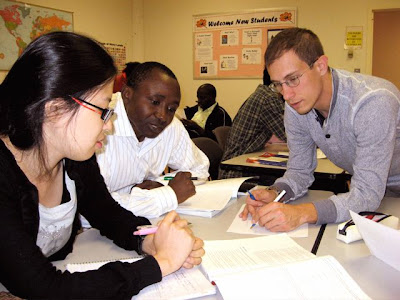
The California State University system has shown much success administering a policy in recent years on this very subject. They offer remedial placement exams to all high-school students, without charge, one year earlier, at the end of the 11th grade. That would give each student an idea of where they are, allowing them to take that additional math class or concentrate very hard in English (or even get tutoring) during their senior year. Now, I’m not saying that this is the only way, or the best, but it is a start…
I think what shocks parents and students the most when I meet with them to talk about going to college is when I ask to speak to anyone in the 7th grade or higher. They ask why and the response is always the same: “Going to college is more a mindset than a decision.” Of course, you should decide that you want to go to college, and decide that you will prepare yourself, and decide that this that and the other will get done... But it really only takes one decision to go to college – the rest is acting on it and seeing it through, thus the mindset.
Now, I’ll walk you through each decision once the student has that mindset… Stay tuned.

For most students, news of their shortcomings is a shock. Remedial class placement, which is usually determined by standardized tests taken in the months between leaving high school and starting college, is highly associated with an increased risk of dropping out. Thus, those students that are prepared academically have a greater likelihood of persisting and graduating. So how can we change this current situation? The students need to be more aware of where they stand – both to prepare better, and not be stunned when they are told they need to take Math 75 (which won’t count for their degree, but they will have to pay for it) before they even have a chance at getting into Math 101 or higher (depending on their proposed major.
In a poll done by high school counselors in 2008 found that the majority of high school students often waste the 12th-grade year on courses not in line with a college preparatory curriculum. That would be taking classes such as (but not limited to) journalism, art, choir, or physical education that are neither required for graduation nor necessary for college admission. Electives can be good, and are needed as evidence of a well-rounded secondary education, but taking too few “core” academic subjects during the senior year is frowned upon and can hurt not only an admission to a potential university, but also a student’s recollection and therefore his or her ability to successfully pass that barrage of standardized tests typically taken during or directly following the 12th-grade year.

The California State University system has shown much success administering a policy in recent years on this very subject. They offer remedial placement exams to all high-school students, without charge, one year earlier, at the end of the 11th grade. That would give each student an idea of where they are, allowing them to take that additional math class or concentrate very hard in English (or even get tutoring) during their senior year. Now, I’m not saying that this is the only way, or the best, but it is a start…
I think what shocks parents and students the most when I meet with them to talk about going to college is when I ask to speak to anyone in the 7th grade or higher. They ask why and the response is always the same: “Going to college is more a mindset than a decision.” Of course, you should decide that you want to go to college, and decide that you will prepare yourself, and decide that this that and the other will get done... But it really only takes one decision to go to college – the rest is acting on it and seeing it through, thus the mindset.
Now, I’ll walk you through each decision once the student has that mindset… Stay tuned.
Subscribe to:
Posts (Atom)